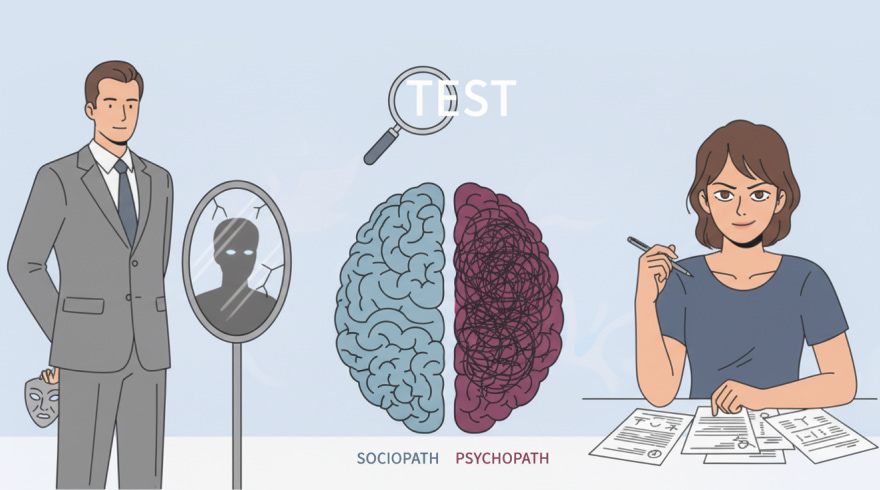
Sociopathy Self-Assessment Guide: How Online Screeners Work and What They Reveal
- 22 December 2025

Understanding What Sociopathy Screeners Aim to Measure
People are naturally curious about personality patterns that feel confusing, especially when relationships feel strained or empathy seems inconsistent. That curiosity has fueled the popularity of online self-assessments designed to explore traits commonly associated with sociopathy, such as chronic rule-breaking, shallow affect, and manipulativeness. While these tools cannot diagnose a condition, they can spotlight behavioral themes worth discussing with a qualified clinician. A well-crafted screener uses validated question formats, clear scoring instructions, and nonjudgmental language so that users can reflect without feeling labeled. It also frames results as probabilities and tendencies instead of definitive pronouncements, reducing anxiety and preventing self-stigma.
Because confusion is common, people appreciate practical resources that clarify what these instruments do and what they cannot do. Many readers explore tools like the are you sociopath quiz format to get a quick, reflective snapshot of interpersonal tendencies today. To make that snapshot meaningful, it helps to understand how items are constructed, how response patterns translate into scores, and how cutoffs are only rough markers rather than sharp lines. When you read score explanations, look for cautions about context, life stress, and comorbid issues that can influence responses. Thoughtful language, privacy safeguards, and transparent data policies should be visible before you start any questionnaire.
- Screeners suggest patterns; clinicians provide diagnoses.
- Context, stress, and culture can shape how traits appear.
- Clear descriptions of scoring and privacy are essential.
How These Questionnaires Work Under the Hood
Behind a user-friendly interface lies a structured set of items built to probe traits like impulsivity, deception, remorselessness, and callousness. Good screeners balance direct statements with behaviorally specific prompts that avoid loaded judgments. Many also counter response bias with reverse-scored items and consistency checks, which helps filter out random clicking or overly idealized self-portrayal. In addition, score interpretation is often tiered, with ranges that map to low, moderate, and elevated indicators for certain tendencies. Even with careful engineering, though, any self-report format reflects your current mood, self-awareness, and willingness to be candid.
For users who want a broader lens, you may see composite tools that bundle empathy, antisociality, and risk-taking into a single pathway. Some sites present variations branded with terms such as the are you a sociopath or psychopath quiz to emphasize coverage of overlapping but distinct constructs now. Regardless of branding, quality assessments explain the difference between screening and diagnosis, list references, and avoid sensationalism. You should also expect plain-language guidance on what higher scores suggest, what they do not prove, and how to follow up responsibly. Calibration notes, such as how thresholds were chosen and tested, add vital context.
- Look for clear item wording and balanced scales.
- Expect transparency about scoring and limitations.
- Prefer tools referencing research-backed inventories.
Benefits, Limitations, and Realistic Expectations
A thoughtful self-assessment provides three immediate benefits: orientation, language, and direction. Orientation means you gain a bird’s-eye view of your patterns instead of a swirl of half-formed impressions. Language means the results give you vocabulary for discussing traits with a therapist or trusted person, which can turn vague discomfort into a constructive plan. Direction means you receive suggestions for reflective next steps, like journaling, boundary-setting, or scheduling a professional consult. Effective tools also include reminders about situational factors, such as grief, burnout, or trauma, that can temporarily shift how you answer.
There are also limits you should keep in mind when exploring any online screener. Marketing headlines sometimes blur complexity, and you may encounter a flashy label like an are you psychopath or sociopath quiz that oversimplifies nuanced research too. Self-reports can understate traits when someone minimizes issues or overstate them when someone catastrophizes. Cultural norms can influence how items are interpreted, especially around assertiveness or emotional expression. Responsible usage means you take results as conversation starters rather than verdicts and treat any elevated range as a prompt for careful, empathetic inquiry. If you feel distressed by what you read, it’s wise to pause and consult a mental health professional who can contextualize findings.
- Benefit: clearer self-understanding and shared vocabulary.
- Limitation: susceptibility to bias and mood effects.
- Best practice: use results as a springboard, not a label.
Quick Comparison: Features to Consider Before You Start
Before clicking through any assessment, it helps to compare a few concrete features. Start with transparency: does the tool cite sources or research traditions, such as established inventories that inspired the item pool? Next, review privacy: does the site explain data retention, third-party sharing, and anonymization? Finally, check usability: are the instructions concise, and does the scoring explanation feel straightforward rather than cryptic? A simple features snapshot can make selection easier and reduce second-guessing later.
While comparing options, you may notice names that look nearly identical across sites. Labels referring to an are you a sociopath test can be used loosely by different creators, and methodologies may vary widely indeed. That’s why it’s smart to evaluate the structure, not just the title, paying attention to how items were designed and how results are framed. The aim is to find a balanced, well-explained tool that respects your time and privacy.
| Feature | What To Look For | Why It Matters |
|---|---|---|
| Item Quality | Behavior-based, clear wording, balanced scales | Reduces ambiguity and response distortion |
| Score Explanation | Ranges, caveats, next-step suggestions | Promotes responsible interpretation |
| Privacy Policy | Data retention limits and no third-party sale | Protects sensitive responses |
| Research References | Sources, validation notes, author credentials | Signals credibility and rigor |
| User Experience | Clear instructions and mobile-friendly layout | Encourages thoughtful, honest answers |
Use this table as a quick audit before committing your time and information. If a tool fails on privacy or offers no detail about how scores are derived, consider alternatives that meet higher standards. Keep in mind that the most helpful screeners create a psychologically safe experience: they avoid stigmatizing language, they contextualize elevated ranges, and they point to constructive resources. That orientation ensures your reflection translates into meaningful insight rather than worry or confusion.
Interpreting Results and Choosing Practical Next Steps
Scores often arrive with ranges like “low indicators,” “moderate indicators,” and “elevated indicators,” plus commentary summarizing trait clusters. A calm, curious mindset helps you read these descriptions without jumping to conclusions, especially if some items felt ambiguous. If a particular subscale stands out, consider situations where those tendencies become more pronounced. Ask yourself what stressors, relationships, or routines might amplify or soften those patterns, and identify small experiments to test different behaviors in daily life.
In addition to reviewing the numeric outcomes, you might also reflect on how you felt while answering each item. Sometimes your discomfort or certainty says as much as your final tally, and noticing your reactions to the are you a sociopath questions can be as revealing as the numbers themselves afterwards. Thoughtful next steps could include journaling examples that fit or contradict the score, discussing observations with a therapist, or practicing specific communication techniques that reduce conflict. If your results left you unsettled, reaching out to a licensed professional can bring clarity and a plan tailored to your context.
- Revisit items that felt unclear and write down examples.
- Pick one behavior to adjust this week and observe outcomes.
- Share results with a clinician for nuanced interpretation.
Responsible Use, Ethics, and Privacy Considerations
Ethical self-assessment starts with honesty and respect for boundaries, both your own and others’. Avoid using labels to pathologize yourself or anyone else, and resist the temptation to “diagnose” people in your life based on a handful of online items. On the creator side, responsible design means transparent sourcing, robust privacy protections, and careful language that avoids glamorizing harmful behavior. Users deserve to know how their responses are stored, whether analytics are aggregated, and how long data will live on a server.
Because branding can veer into hype, you may encounter a headline promising a definitive outcome through something like a are you a psychopath or sociopath quiz, yet careful creators emphasize nuance throughout. Respectable tools encourage follow-up with professionals, disclaim diagnostic authority, and provide resource links for further reading. If you share results, do so selectively and with context, especially in settings like workplaces or social media where misunderstandings can spread. Finally, remember that empathy and accountability are skills you can practice, regardless of how any screener frames your current tendencies.
- Seek assessments with clear ethics and privacy policies.
- Avoid labeling others based on internet results.
- Consult professionals for personalized guidance.
FAQ: Common Questions About Sociopathy Screeners
Is an online screener the same as a diagnosis?
No, a digital questionnaire is a preliminary self-assessment designed to highlight patterns, not to confirm a clinical condition. Only a licensed mental health professional can evaluate history, context, and differential factors to make or rule out a diagnosis. Treat online results as conversation starters and plan follow-up steps accordingly.
How accurate are these tools?
Accuracy varies by design quality, research basis, and your candor when answering. Screeners grounded in established constructs tend to produce more reliable signals, but even then, mood, stress, and interpretation can sway responses. Use results to guide thoughtful reflection rather than as definitive proof.
What should I do if my score seems high?
First, take a breath and reread the explanation and caveats to avoid catastrophizing. Reflect on concrete examples from your life that support or contradict the result, and bring those notes to a licensed clinician who can provide context. If the feedback feels alarming, prioritize compassionate self-care while arranging a professional consultation.
Can I retake the same assessment later?
Yes, repeating a screener after meaningful life changes or therapy work can show how patterns evolve. Try to use the same conditions, quiet space, focused mindset, to make comparisons more valid. You can also supplement with a different style of questionnaire to broaden perspective.
Where should newcomers begin?
Many people start with a brief, clearly explained screener to get oriented before diving into more detailed resources. Curious readers sometimes try a succinct option like a test are you a sociopath as an initial step before exploring comprehensive guidance elsewhere. After that first pass, use thoughtful articles, workbooks, or therapy to translate insight into practical change.
Latest News
-
![Understanding and Using a Psychopathy–Sociopathy Quiz Responsibly]()
- 24 December, 2025
-
![Understand Sociopath Quiz: A Comprehensive Guide to Self-Assessments]()
- 23 December, 2025
-
![Sociopath Self-Check Quizzes: A Clear, Helpful Guide to Online Screeners]()
- 19 December, 2025